Team SCCA
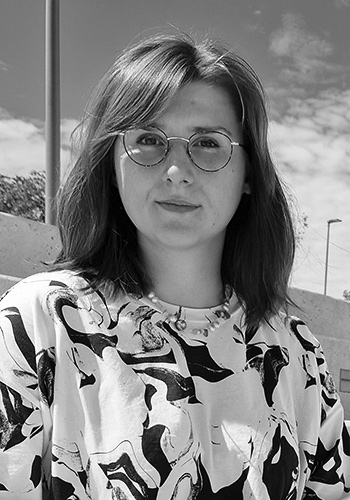
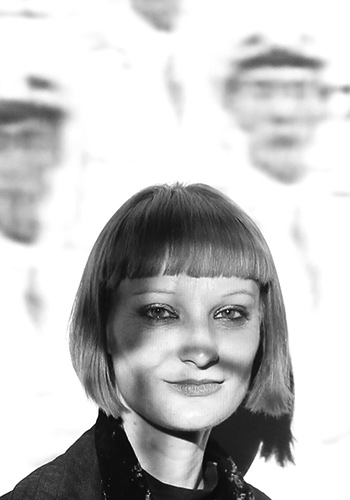
Tia Čiček has been the Artistic Director of Škuc Gallery since January 2020. She holds a Master’s degree in Art History from the Faculty of Arts, University of Ljubljana. In 2019, she completed the World of Art school. They have worked as a curator and producer of contemporary art at the Centre for Urban Culture Kino Šiška and the DobraVaga Gallery. In 2018, she attended a course at the Salzburg Summer Academy led by Ruth Noack and Grace Samboh, titled Thinking with Works of Art. They are a member of the collective bad curating.inc.
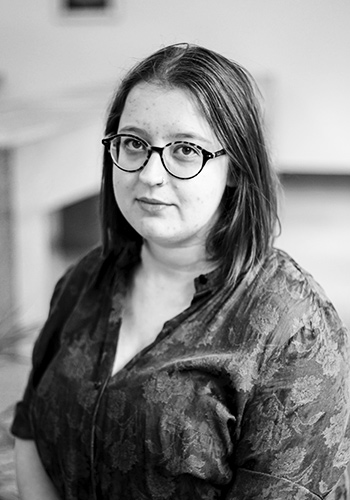
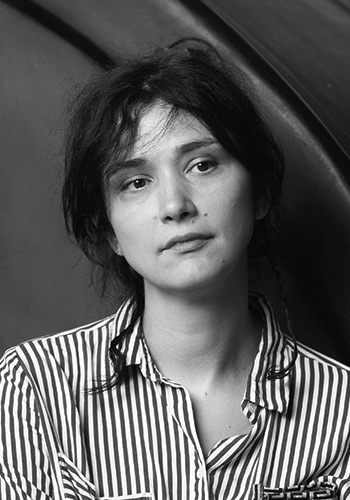
Lara Plavčak has been a professional associate at the SCCA Institute since 2019. She holds a degree in Art History from the Faculty of Arts and in Culturology from the Faculty of Social Sciences, University of Ljubljana. In 2011, she completed the World of Art school. She has curated contemporary art exhibitions at various venues in Slovenia and abroad. From February 2018 to September 2019, she served as Project Manager for Visual, Audiovisual, and Intermedia Arts at the Centre for Urban Culture Kino Šiška. From 2016 to 2019, she managed the ZINE VITRINE program at DobraVaga Gallery.
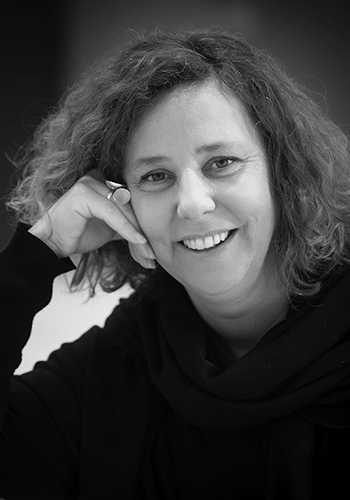
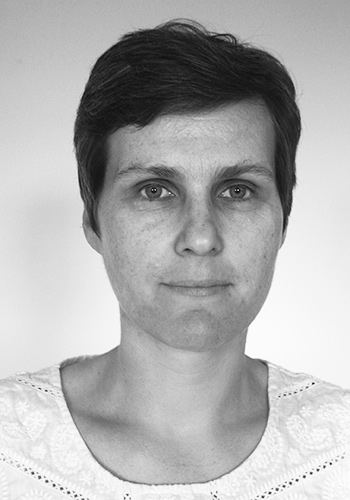
Urška Aplinc works as a producer and curator. In 2022, she was the Artistic Director of the Kino Šiška program for visual and audiovisual arts and intermedia; she is currently self-employed in culture as a curator and sculptor. In 2021, she earned a Master’s degree in Sculpture from the Academy of Fine Arts and Design, University of Ljubljana (ALUO), where she received three ALUO awards for her work. In 2018, she completed the World of Art school at SCCA-Ljubljana and became a professional associate at the Museum and Galleries of the City of Ljubljana. From 2019 to 2022, she was part of the DobraVaga Gallery collective, working as program coordinator and curator, and from 2020 to 2022, she led the cultural-educational program at Kino Šiška. She has curated multiple solo and group exhibitions. As part of her artistic practice, she has participated in several exhibitions and festivals in Slovenia and abroad, including Moderna galerija, Museum of Contemporary Art Zagreb, Galerija Škuc, Cirkulacija2, Centre of Contemporary Arts Celje, and Museum of Contemporary Art Metelkova.
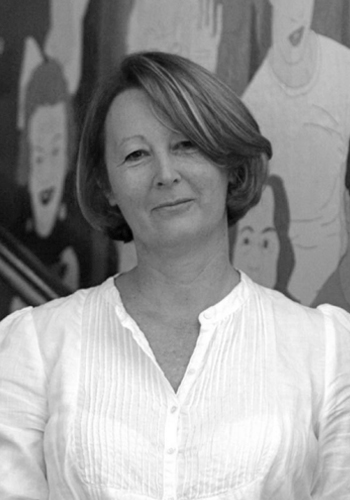
Website: Vesna Bukovec
Mentors
Vadim Fiškin (Penza, 1965) graduated from the Moscow Institute of Architecture (1986). He lived in Moscow until 1996 and now resides in Ljubljana. His work explores the relationship between science, personal experience, desire, and imagination, between metaphysics and pragmatism, between the artificial and the real. His installations, sculptures, photographs, and drawings—often on themes of geography, time, light, aeronautics, and meteorology—are marked by a distinctive sense of humour. He has exhibited in numerous solo and group exhibitions, including: Venice Biennale (1995, 2003, 2005, 2017); 1st Biennale, Valencia; Manifesta 1, Rotterdam; Manifesta 10, Hermitage, St. Petersburg; Galerie Nationale du Jeu de Paume, Paris; Moderna galerija, Ljubljana; Galerija Gregor Podnar, Berlin; Martin-Gropius-Bau, Berlin; Palazzo della Ragione, Milan; Secession and BA WAG Foundation, Vienna; ZKM, Karlsruhe; MACRO, Rome; Drawing Center, New York. He first worked in Slovenia in 1992 at the invitation of Dragan Živadinov, co-creating three theatre projects. He has also collaborated with M. Berger, I. Kovač, E. Hrvatin, B. Jablanovec, I. Buljan, and regularly works with choreographer and dancer Mateja Bučar.
Alenka Gregorič is an art historian, curator, and writer. From 2003 to 2010, she was Artistic Director of Galerija Škuc; from 2010 to 2020, she was Program Director of Mestna galerija Ljubljana and Galerija Tobačna. She is currently employed at Cukrarna as Program Director and curator. She has curated numerous exhibitions in Slovenia and abroad, including curating the Slovenian pavilion at the Venice Biennale (2009) and co-curating the Ljubljana Graphic Biennale (2009). She has organised large retrospectives of women artists from the Balkan region in Istanbul (2016) and in Guangzhou and Hangzhou, China (2017). She has written numerous essays and articles for various publications and edited multiple catalogues, books, and other art publications.
Lecturers
Alenka Pirman (1964) is an artist and writer, a freelance cultural worker. She graduated in painting from the Academy of Fine Arts in Ljubljana (1989). Between 1996 and 1998 she studied Anthropology of Everyday Life at Institutum Studiorum Humanitatis (ISH), and in 2022 she earned a PhD in Heritology from the Faculty of Arts, University of Ljubljana. Her work examines the social role of the artist in mediating cultural heritage. In the 1990s her practice was linked primarily to fictional institutions: SK8 Museum (1991–93), RIGUSRS – Research Institute for Geo-Art Statistics of the Republic of Slovenia (1997, with Vuk Ćosić and Irena Woelle), and the Institute for Domestic Research (1994–98). She has carried out several methodological exhibition projects, including work with a collection of German loanwords (Arcticae horulae, 1991–98), with the deposited collection of the Police Museum (Case. Art and Crime, 2005, with Biserka Debeljak), and later focused on the development of ephemeral artworks(Deveta Koromandija, since 2007). In 2014 the International Centre of Graphic Arts (MGLC) presented a survey exhibition of her artistic work. Since 2004 she has worked within the Domestic Research Society (DDR), focusing on the phenomenon of amateur collecting and on the transformation of an object’s status through market, artistic, and museal processes.
Dominika Maša Kozar began exploring the music world after studying musicology. As a member of the band FUTURSKI, she is active in music production and all aspects of band life. She works with CUK Kino Šiška, the MENT Ljubljana music festival, and the CoFestival dance festival in online promotion. She is a program associate at the Ljubljana club Gala Hala and a former manager and promoter of KAPA Records.
Ema Ograjenšek is a writer, curator, and critic of contemporary visual art. He is a former member of the editorial board of ŠUM and its research collective. He has collaborated with institutions such as the International Graphic Arts Centre (MGLC Ljubljana), Museum of Contemporary Art Metelkova (MSUM), Galerija Škuc, PhaseBook Prague, and the International Festival of Computer Arts (IFCA) through lectures and seminars.
Janez Fakin Janša is a conceptual artist, performer and producer living in Ljubljana, Slovenia. He is the author of numerous videos, performances, installations and new media works which have been presented in several exhibitions and festivals around the world. He is the director of the film My Name Is Janez Janša, co-founder and co-director of Aksioma – Institute for Contemporary Art, Ljubljana (together with Marcela Okretič) and artistic director of the Aksioma | Project Space. He has been teaching at the Academy of Fine Arts and Design of the University of Ljubljana since 2016.
Aksioma – Institute for Contemporary Art, Ljubljana is a non-profit cultural organization that produces, presents, and disseminates art projects as well as exhibition, discursive, and educational programs with the aim of critically understanding the structures of contemporary society and the role that new technologies play in shaping the way we perceive it.
Jasna Jernejšek works as an independent curator, project manager, lecturer, writer, critic, and reviewer in contemporary visual arts. She focuses on contemporary authorial practices, photography theory and history, and visual literacy, combining them with social sciences. She holds a degree in Culturology (2007) and a Master’s in Communication Studies (2013). She writes exhibition and catalogue texts for journals and serves as Senior Lecturer and Program Director of the Photography Department at VIST – Faculty of Applied Sciences, Ljubljana. She also leads Sektor, a centre for media arts research and promotion, collaborating with domestic and international institutions.
Lenka Đorojević critically investigates and interprets the ambivalence of the (artistic) subject’s position within the production, representational, ideological, and symbolic narratives and strategies of late capitalism, both in her own practice and through work in various collectives. She has worked as a writer, curator, and project coordinator at City of Women Festival, Ljudmila Association, SCCA–Ljubljana, Radio Študent … Since 2015 she has been a program associate at the Institute of Contemporary Art in Montenegro. She is currently employed as a producer at Cukrarna.
Katja Mahnič is an Associate Professor of General Art History at the Department of Art History, Faculty of Arts, University of Ljubljana. She teaches general art history, museology, and conservation, researching material culture, historical museology, exhibition development, and the role of art collections and museums in establishing art history as a scientific discipline, with a focus on accessibility.
Lilijana Stepančič is an economist and professor of art history and sociology. She has served as director of cultural institutions and curator, writes art criticism, and publishes essays on 20th- and 21st-century art. She regularly contributes to Likovne besede.
Matic Vrabič has been working in architecture, design, and curating for more than a decade. He is the co-founder of the architectural studio Mertelj Vrabič Arhitekti, active in Ljubljana since 2015. Their work includes furniture design, exhibition design and curating, renovations at various scales, and the design of standalone buildings. He is the co-author of the Slovenian pavilion at the 18th International Architecture Exhibition, La Biennale di Venezia. As a guest lecturer and critic, he has taught at several European universities, including University College Dublin, TU Berlin, the Academy of Architecture USI Mendrisio, TU Wien, and Università Iuav di Venezia.
Miha Satler works in arts, cultural production, and advocacy. At Asociacija, he provides professional support, including resolving legal and administrative issues for self-employed cultural workers.
Mojca Podlesek is Head of Public Relations for Cukrarna and the Indigo Festival. In this role she shapes the visibility of these cultural spaces, working closely with curators and artists to communicate their vision and message effectively to the public. Her focus is on thoughtful communication that encompasses exhibition openings, accompanying programs, guest events, and Cukrarna’s educational programs for children and adults. Years of experience in digital marketing at various agencies have given her a solid grounding in digital strategy, project management, and content creation, which she now applies at Cukrarna. Before joining the team, she worked as an editor for stage arts at Koridor – križišče umetnosti and contributed to the culture desk at Radio Študent. With a master’s degree in dramaturgy, she has a keen sense for artistic vision and narrative power, which informs her work.
Polona Torkar is Head of the Expert Office and Vice President of Asociacija, and has worked in various roles in the domestic cultural field since 2006. Among other positions, she served as Editor-in-Chief of Radio Študent from 2018 to 2020, and as a project manager or member of production teams she has collaborated with the Ljudmila Association, the osmo/za space for developmental arts at KUD Channel Zero, and others.
Nina Vošnjak has worked since 2022 as an education curator at Cukrarna, where she develops public programs aimed at bringing contemporary art closer to children and young people. Prior to this she spent eight years collaborating with the education department of the National Museum of Slovenia and two years as an educator at the City Museum of Ljubljana. She has often worked with the Ljubljana City Library on information-literacy projects focused on natural and cultural heritage, and she briefly worked in lifelong career guidance at the Employment Service of the Republic of Slovenia. Committed to making contemporary art accessible to vulnerable groups, she has volunteered with Altra, Socialna akademija, and Legebitra to gain practical experience with diverse audiences, and completed the Psychotherapy Propaedeutics program with the same aim.
Rok Vevar founded the Temporary Slovenian Dance Archive in his apartment in 2012 and moved it in April 2018 to the Museum of Contemporary Art Metelkova in Ljubljana. He is a co-curator of the international contemporary dance festival CoFestival (Nomad Dance Academy Slovenia, Kino Šiška). In 2018 he edited the book Dan, noč + človek = Ritem: Antologija slovenske sodobnoplesne publicistike 1918–1960, for which he selected the materials and wrote the accompanying texts. His monograph Ksenija, Xenia: Londonska plesna leta Ksenije Hribar 1960–1978 was published in 2020. For his work he received the Ksenija Hribar Award (2019) and the Vladimir Kralj Recognition (2020) for achievements in theatre criticism and theatre studies for 2018–2019. In 2020 he co-curated the exhibitions Avtografija, zagonetnost, uporništvo: fotografija Božidarja Dolenca and SPOZNANJE! UPOR! REAKCIJA! Performans in politika v devetdesetih letih v pojugoslovanskem kontekstu at the Museum of Contemporary Art Metelkova. In the academic years 2020/21 and 2021/2022 he taught at the Anton Bruckner Private University in Linz (Austria), Department of Contemporary Dance and Movement Research. He is a freelance cultural worker.
Saša Lesjak, social pedagogue, poet, and mother of three, co-founded Zavod RISA, serving as Head of Social Programs. For over 20 years, she has worked with children, youth, and adults in vulnerable positions. She conducts workshops, seminars, and training on social inclusion and easy reading. She co-developed a four-level easy reading system in Slovenian and authored multiple adaptations and original texts.
The RISA Institute, Centre for General, Functional and Cultural Literacy, was established to carry out independent research with the participation of its users, to develop a variety of programmes, and to provide counselling as well as communication, educational, social, and community activities in the fields of disability and human rights. Its aim is to give a voice primarily to those who are most often silent or unheard. RISA is the first organisation in Slovenia to have systematically introduced and begun developing the concept of easy-to-read materials. It collaborates with organisations from across Slovenia and Europe. The users and co-creators of its services are people who, due to cognitive, linguistic, or other barriers, experience difficulties in accessing and sharing information – challenges that can hinder their ability to organise their own lives and live independently.
Simon Gmajner previously worked in international relations and analysis; for over 15 years, he has been active in cultural and artistic fields, mainly as a producer and project coordinator. He focuses on international projects in contemporary research-based art, especially transdisciplinary collaborations and intersections between art, science, and technology, including projects funded by Creative Europe and the European Commission. He produces and coordinates Vivarij (Laboratory for Plants, Animals, and Robots) at Zavod Kersnikova.
Urška Jež holds a degree in Culturology and a Master’s in NGO Management. She has been a cultural producer since 2006 with Društvo Mesto žensk. Previously, she worked as Executive Producer at Animateka International Animated Film Festival and collaborated with other NGOs in the cultural sector. She has conducted fundraising training and shares knowledge through workshops.
Vladimir Vidmar is the Artistic Director of the Small Gallery of the Bank of Slovenia. Between 2014 and 2018, he was Artistic Director of Galerija Škuc. He holds degrees in Philosophy and Journalism from the University of Ljubljana. His curatorial projects include numerous solo exhibitions and international group projects. He has published extensively on contemporary art practices and has taught at the Academy of Fine Arts and Design, Ljubljana, since 2016.
Yasmín Martín Vodopivec is a cultural manager and curator. She completed postgraduate studies in international cooperation and cultural management, a Master’s in management of cultural institutions and companies (University of Barcelona), and a Master’s in Education and Museums: Heritage, Identity, and Cultural Mediation (University of Murcia). Since 2011, she has been Assistant Director at MGLC, applying her expertise across film, music, dance, and visual arts to museum programming and the Ljubljana Graphic Biennale.